Today we embark on Day Four of our examination of The Hsin Hsin Ming — Verses on the Faith Mind by Chien-chih Seng-ts’an, the Third Zen Patriarch. We are nearing the end of this effort to share and understand this profound writing. I expect we will finish this in our fifth and final installment on Monday, July 13th. Today I see much repetition in the verses of concepts we have already discussed, so I fully expect this analysis will be fairly short.
The verses we shall discuss today are as follows:
To live in the Great Way is neither easy nor difficult.
But those with limited views are fearful and irresolute:
the faster they hurry, the slower they go.
And clinging (attachment) cannot be limited:
Even to be attached to the idea of enlightenment
is to go astray.
***
Just let things be in their own way
and there will be neither coming not going.
Obey the nature of things (your own nature)
and you will walk freely and undisturbed.
All attachment is a misuse of the mind and leads us, inevitably to suffering, 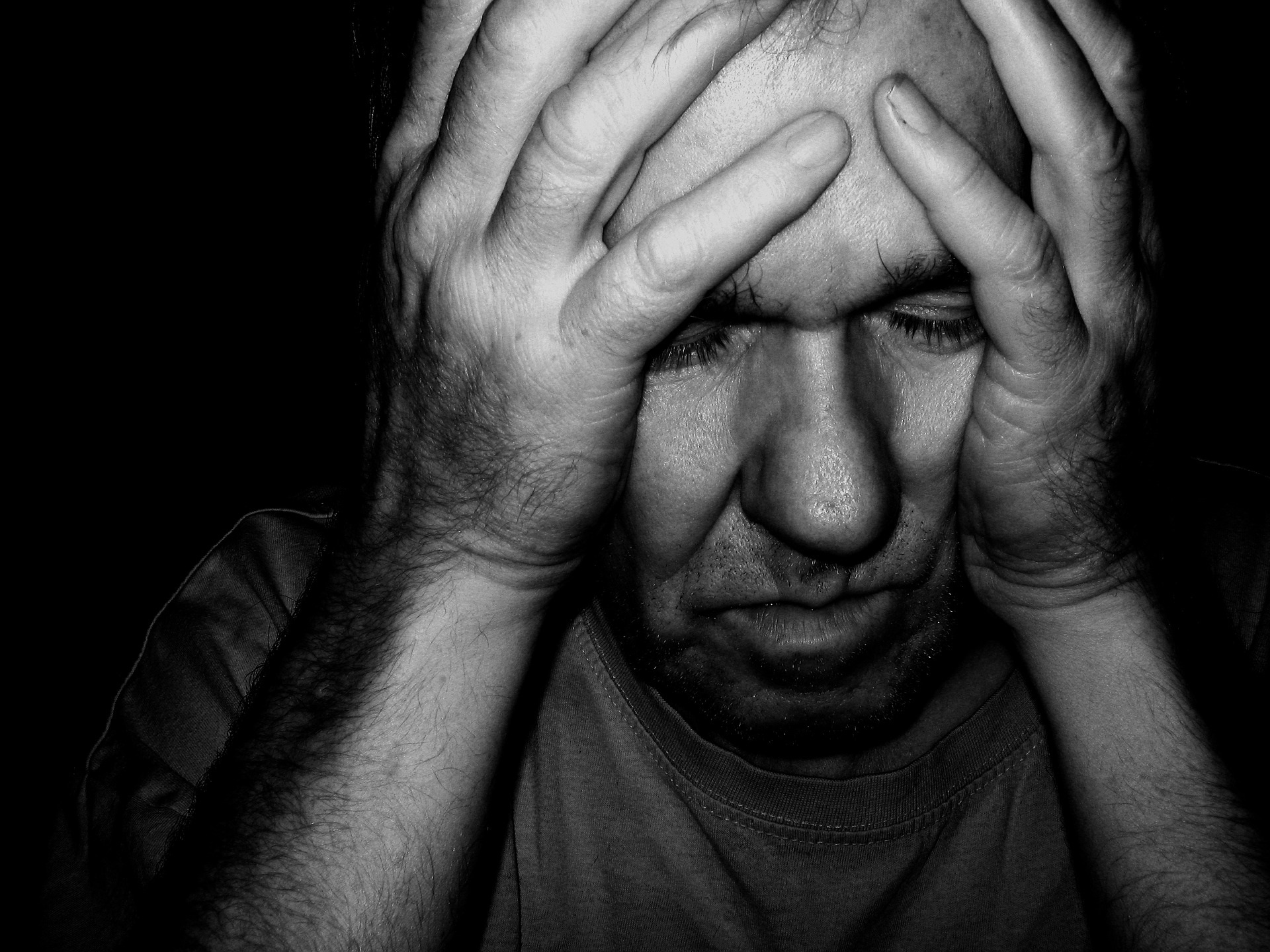 even attachment to what the mind thinks enlightenment should look like. No matter how wise we are, the mind cannot comprehend the width and breadth of capital “M†Mind, our true Self. Any version of enlightenment which mind can imagine, must necessarily fall short of the Truth that enlightenment affords. The problem with being attached to anything, even the concept of enlightenment, is that we suffer anytime life falls short of our definitions and expectations. It is best to simply not bother, to “let things be in their own way†as Chien-chih Seng-ts’an suggests without the minds interference; without defining, expecting or attaching to such definitions or expectations.
I hope that it clear. I am really struggling to put the concept of merely allowing everything to “be” into words which seek to define that which begs no such definition. Such is the nature of writing about a way of living which is beyond the mind’s ability to put into language.
When the thought is in bondage the truth is hidden
for everything is murky and unclear.
And the burdensome practice of judging
brings annoyance and weariness.
What benefit can be derived
from distinctions and separations?
***
If you wish to move in the One Way
do not dislike even the world of senses and ideas.
Indeed, to accept them fully
is identical with enlightenment.
Every True spiritual path directs us to greater and wider freedom.  By abandoning the natural tendencies of the human mind, we find ourselves free to let life Be greater than we can possibly imagine. I think it is important, here, to state that there is nothing wrong with the human mind. The ego serves a very real function. It has kept us safe, up to this point in our life, which is really its purpose. The challenge is that this safety net can only take us so far. The fact that you are exploring this teaching, with me, proves that your soul has a desire to go beyond the limitations imposed by the human mind. So, do not judge the wonderful brain which holds historical data you need for your journey, but do not cling to that “instrument of the past,” either. For the freedom you seek, the ecstasy we all crave, lies out beyond the boundaries of the minds borders.
The wise man strives to no goals
but the foolish man fetters himself.
There is one Dharma, not many.
Distinctions arise
from the clinging needs of the ignorant.
To seek Mind with the (discriminating) mind
is the greatest of all mistakes.
***
Rest and unrest derive from illusion;
with enlightenment
there is no liking and disliking.
All dualities come from ignorant inference.
They are like dreams or flowers in air –
foolish to try to grasp them.
Gain and loss, right and wrong,
such thoughts must
finally be abolished at once.
Similar to the way I write, Chien-chih Seng-ts’an repeats himself here so that anyone who missed the message, in the other ways he expressed these Truths, will once again have the opportunity to grasp them here. I recommend rereading the entire Hsin Hsin Ming, up to this point, with a quiet mind and allow its beauty and its Truth to open new doors for you. Even though it is true that we cannot truly experience enlightenment with the same mind which has brought us to this point, we can begin to recognize that these words point us in a direction which is beyond any place we have ever been, even if we have had glimpses of enlightenment. As Rumi is so famously quoted as saying,
“Out beyond ideas of wrongdoing and rightdoing,
there is a field. I’ll meet you there.
When the soul lies down in that grass,
the world is too full to talk about.
Ideas, language, even the phrase “each other” doesn’t make any sense.â€

If you are successful at allowing the thoughts expressed in the Hsin Hsin Ming to sink into your awareness, I am certain that you will understand these words of Rumi with a new-found clarity. They do, afterall, point in the exact same direction as Chien-chih Seng-ts’an’s profound thoughts.
If the eye never sleeps,
all dreams will naturally cease.
If the mind makes no discriminations,
the ten thousand things are as they are,
of single essence.
To understand the mystery of this One-essence
is to be released from all entanglements.
I say, with great regularity, that once we understand who and what we are, our life changes dramatically. When we finally own the Truth that we are not our bodies, that we are not our minds, we are, at once, freed of all the “entanglements†that the old-mind created so naturally. Any spiritual path, worth pursuing, offers freedom as its end-goal, even if many of the more fundamental traditions mask this promise in language which does not necessarily state this objective clearly. When we focus on similarities as opposed to arguing differences, we learn that all “true†spiritual pursuits lead the aspirant in the direction of greater freedom, even if the idea of “how†to get there differs.
In Truth, there is never anything to be free of, except the concept that freedom is needed, but that is the subject for another day. Today I want to close with the wise words of the infamous Fourth-Century Taoist and Mystic Chuang Tzu:
The non-action of the wise person 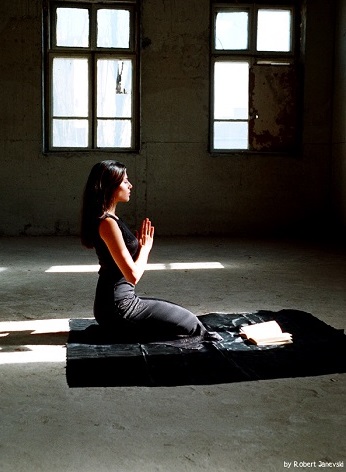
Is not inaction.
It is not studied.
It is not shaken by anything.
The sage is quiet
Because she is not moved,
Not because she wills to be quiet.
Her quietness is the mirror
Of heaven and earth
The glass of everything.
Emptiness, stillness, tranquility,
Traceless,
Silence, non-action:
This is the level of
Heaven and earth.
This is the perfect Tao.
Ultimately freedom is remembered, not really found. It is uncovered in the Peace which we encounter when we are able to quiet our restless minds. It is recalled in the silence where Self resides and True Mind exists. No one can take us to this discovery, nor can anyone walk this path for us. All anyone can ever do is point the way and promise that the journey will be worth the effort, if one has the tenacity to persevere.
Today we will continue with the third installment of our examination of The Hsin Hsin Ming — Verses on the Faith Mind by Chien-chih Seng-ts’an, the Third Zen Patriarch.
Consider this thought:
The more you talk and think about it,
the further astray you wander from the truth.
Stop talking and thinking,
and there is nothing you will not be able to know.
***
To return to the root is to find meaning,
but to pursue appearances is to miss the source.
At the moment of inner enlightenment
there is a going beyond appearance and emptiness.
The changes that appear to occur in the empty world
we call real only because of our ignorance.
While there are some occurrences of spontaneous enlightenment, sometimes after traumatic or near-death experiences, most people only become enlightened as a result of letting go of all the meaning assigned to the world of perception. The most common method of obtaining this wisdom is as a result of meditation  and complete immersion in silence. Once an individual discovers the Truth found in the “peace which surpasses understanding,†he/she can never look at the world of perception with their pre-understanding eyes again. And while this experience can be impossible to describe within the confines of language, there can never be any doubt as to the Truth which underlies everything in the physical. This Truth exists simultaneously beyond and beneath appearance.
Do not search for the truth;
only cease to cherish opinions.
do not remain in the dualistic state.
Avoid such pursuits carefully.
If there is even a trace of this and that,
of right and wrong,
the mind-essence will be lost in confusion.
***
Although all dualities come from the One,
do not be attached even to this One.
When the mind exists undisturbed in the Way,
nothing in the world can offend.
And when a thing can no longer offend,
it ceases to exist in the old way.
As we have discussed in one of the previous examinations, the mind which judges as good or bad, right or wrong, etc. is the old mind. Since we spent so many years habitually observing and classifying the world in this old way, it can take considerable effort to dwell in our new-found, present-moment Awareness, even though we have had an experience of enlightenment. We must be ever vigilant to ensure that we do not lapse into our old mind’s behavior, as one judgment can disrupt the calm, peace we enjoy. What is beautiful about this present-moment awareness is that nothing can offend us, because we no longer judge anything as offensive. Simply by removing our reactions to the world, we free ourselves to dwell in perpetual joy.
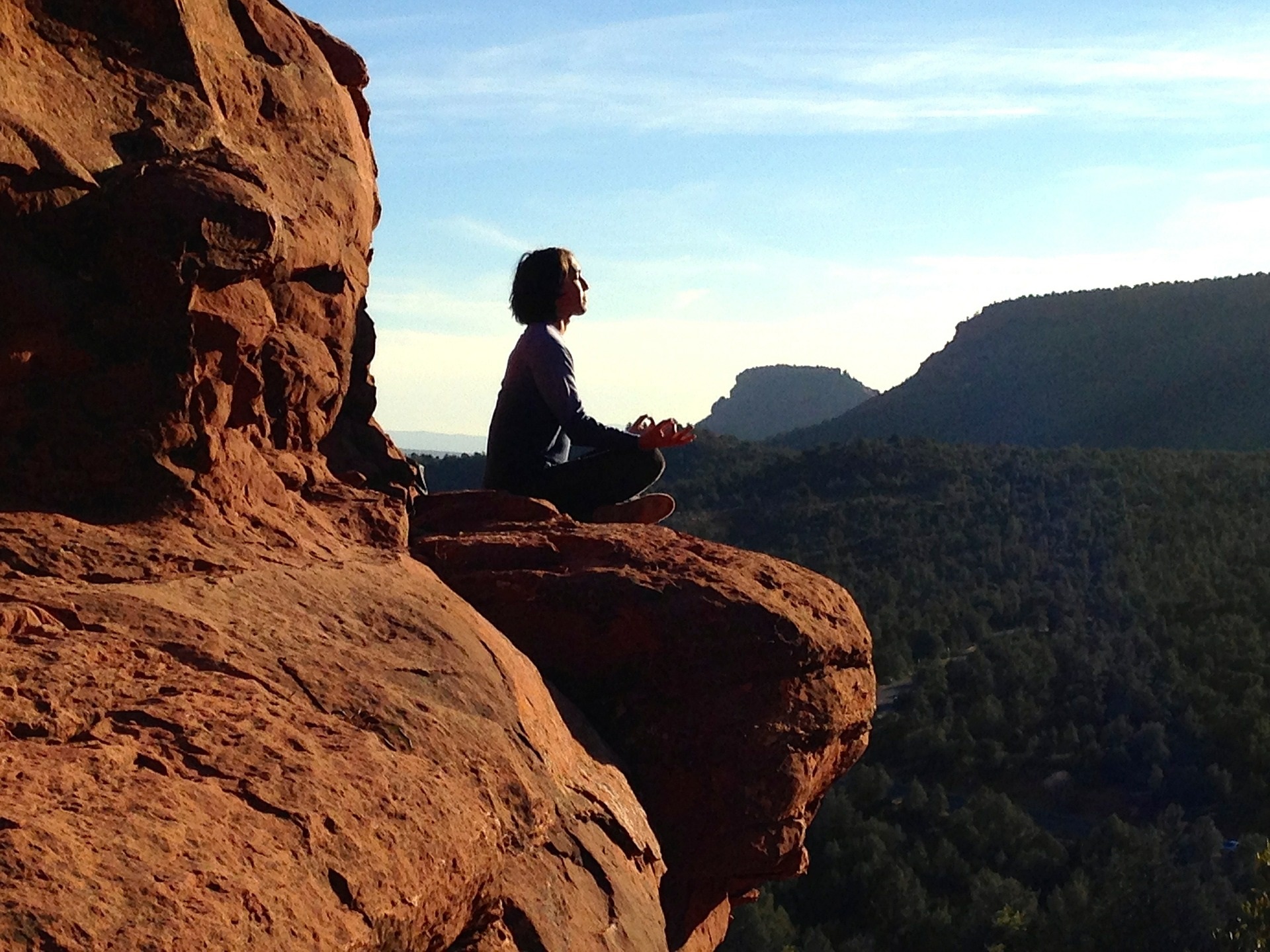
When no discriminating thoughts arise,
the old mind ceases to exist.
When thought objects vanish,
the thinking-subject vanishes:
As when the mind vanishes, objects vanish.
***
Things are objects because of the subject (mind):
the mind (subject) is such because of things (object).
Understand the relativity of these two
and the basic reality: the unity of emptiness.
In this Emptiness the two are indistinguishable
and each contains in itself the whole world.
If you do not discriminate between coarse and fine
you will not be tempted to prejudice and opinion.
These two verses of the Hsin Hsin Ming describe a natural progression which occurs when we are successful at letting go of the brains tendency to label everything. First, we notice a beautiful peace as we are no longer reacting to the things of the world. Next, we notice that the self which “thinks†no longer exists, as there is no need to use the brain in this manner, when there is nothing to think about. Finally, the self, the small “s†self, which identified itself as a thinker, as a being separate from everything else in the world, vanishes. There is nothing to do and no one to do it. This is the ultimate freedom to which Papaji points in this thought: “Do nothing. Your whole problem is that you continue doing. Stop all your doing. Stop all your beliefs, all your searching, all your excuses, and see for yourself what is already and always here. Don’t move. Don’t move toward anything, and don’t move away from anything. In this instant, be still. “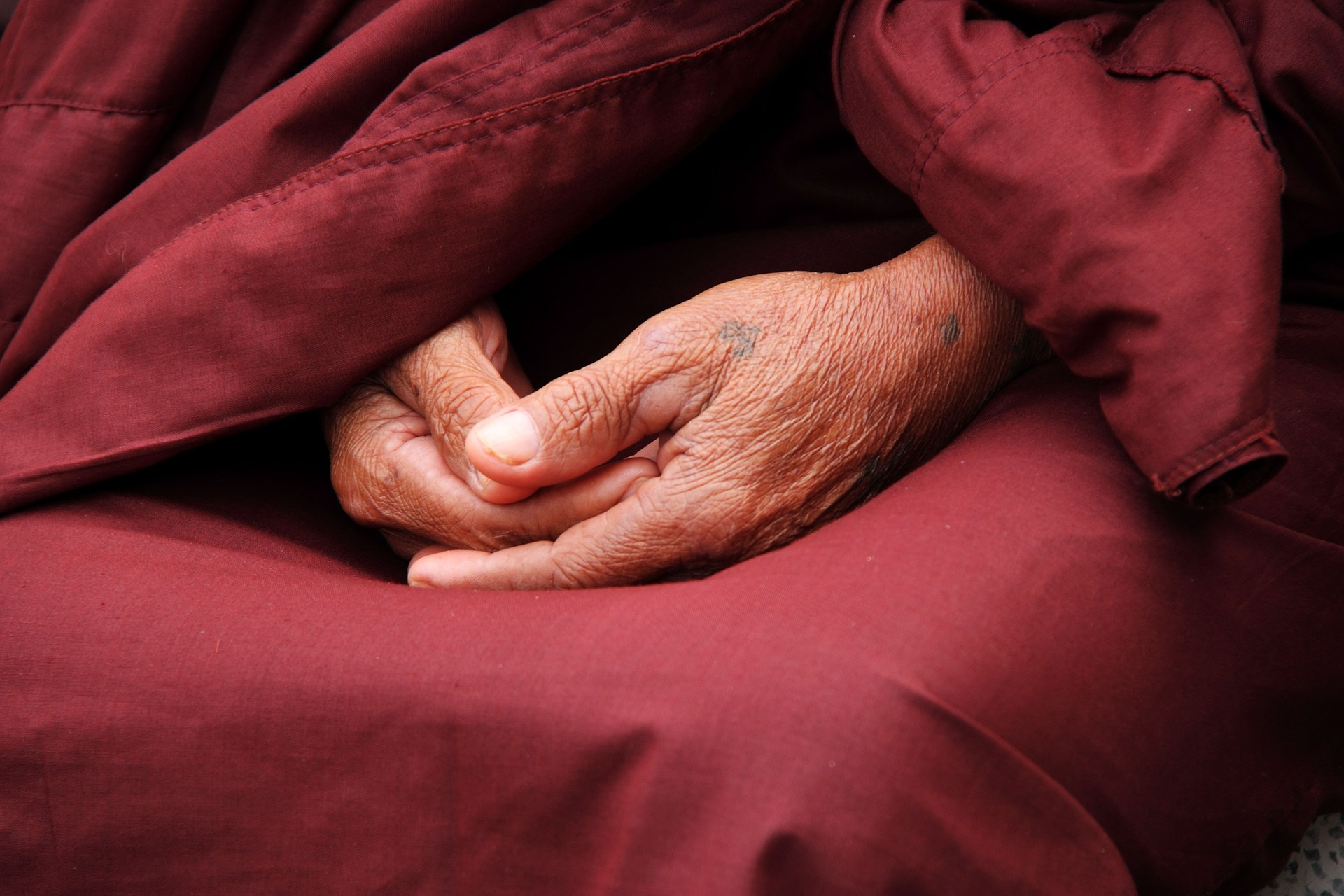
Both Papaji and Chien-chih Seng-ts’an insist that searching for truth is futile. What is awaiting our discovery and our recognition is that “What is Real does and has always existed†as the Truth from which “all there is†arises. Searching for this Truth only results in frustration, but letting go of everything which is not Real results in an Awareness of Truth, nonetheless.
In closing, I will leave you with the words of Gangaji, Papaji’s student. Ponder these thoughts, which I think fit nicely with the thoughts we have already explored today: “I realized that whatever I thought was always only a thought because it was subject to conditioning and disappearance. In the discovery of truth, thought could no longer be trusted. Thought could no longer be the master. The previous fear of not knowing was transformed into the joy of not knowing. To not know was the opening of my mind to what could not be perceived by thought. What relief! What profound relief.â€
Yesterday we examined the first two stanzas of the Hsin Hsin Ming — Verses on the Faith Mind by Chien-chih Seng-ts’an, the Third Zen Patriarch. Today we will continue this exploration.
Let’s look at the next two verses of this piece:
The Way is perfect like vast space
where nothing is lacking and nothing in excess.
Indeed, it is due to our choosing to accept or reject
that we do not see the true nature of things.
Â
Live neither in the entanglements of outer things,
nor in inner feelings of emptiness.
Be serene in the oneness of things and such
erroneous views will disappear by themselves.

The life Chien-chih Seng-ts’an urges us to live is the middle way: Not allowing ourselves to be ruled by outer events yet not refusing to engage in life because we are too comfortable in our own inner sanctuary. A life, fully lived, is one that is not dominated by the constant demands of an ego-based determination of what is preferable over what is not, nor is it one where the individual withdraws from all contact with the outer for individually justified reasons.
I read these words, yesterday, after posting the first Secret in this series, but I think it still fits in with today’s reading, so consider these words from A Course in Miracles: “The world we see merely reflects our own internal frame of reference –– the dominant ideas, wishes and emotions in our minds. ‘Projection makes perception.’ We look inside first, decide the kind of world we want to see and then project that world outside, making it the truth as we see it. We make it true by our interpretations of what it is we are seeing. If we are using perception to justify our own mistakes –– our anger, our impulses to attack, our lack of love in whatever form it may take –– we will see a world of evil, destruction, malice, envy and despair. All this we must learn to forgive, not because we are being “good†and “charitable,†but because what we are seeing is not true. We have distorted the world by our twisted defenses, and are therefore seeing what is not there. As we learn to recognize our perpetual errors, we also learn to look past them or “forgive.†At the same time we are forgiving ourselves, looking past our distorted self – concepts to the Self that God created in us and as us.â€
Doesn’t that fit nicely with yesterday’s discussion, while still being applicable to today’s reading?

Moving on we read:
When you try to stop activity by passivity
your very effort fills you with activity.
As long as you remain in one extreme or the other
you will never know Oneness.
Living in the middle way means we give up the need to control our life experience. We do not try to only “BE†nor do we try to “DO†in an effort to create the outcome we seek. We live a life of balance, with time for simply Being and time for Doing. The middle way is all about balance.
Next we read:
Those who do not live in the single Way
fail in both activity and passivity,
assertion and denial.
To deny the reality of things
is to miss their reality;
To assert the emptiness of things
is to miss their reality.
In metaphysical circles we frequently hear the words “the world is merely illusion.†This is often interpreted to mean that nothing is real, everything is our own creation. But I would suggest that this interpretation of this statement is not fully correct. The world is illusory because we believe ourselves to be separate from everything we see, when in Truth we are One with everything. In fact, there is only ONE. There is no separate you and me, there is only the ONE manifesting as an aspect of itself “me†and an aspect of itself “you.†The belief in separateness creates all of our problems; for once we see and know the Truth of our Oneness we cannot possibly hate or hurt another.
Again, I look to A Course in Miracles for a good explanation of the illusory nature of the world which our senses tells us is real: “In the realm of knowledge no thoughts exist apart from God, because God and his Creation share one Will. The world of perception, however, is made by the belief in opposites and separate wills, in perpetual conflict with each other and with God. What perception sees and hears appears to be real because it permits into awareness only what conforms to the wishes of the perceiver. This leads to a world of illusions, a world which needs constant defense precisely because it is not real.â€
To me, this writing and the Hsin Hsin Ming state that the reason we cannot trust the world we perceive, with our five senses, is not because this world is not real, it is because we project our truth on the world we see instead of “feeling†what is real.
I will close, for today, with one more thought from A Course in Miracles which I feel parallels perfectly with the Hsin Hsin Ming, and it is that Truth, capital “T” Truth never changes. If we need one simple test for what is Real and what is illusion, as in the case of evaluating everything physical (which is constantly changing), all we need do is recognize that what is Real (Truth) never changes. The fact that we are ONE is a constant, therefore it is Truth. Egoic creation changes daily, sometimes hourly, therefore it is illusion.
In my reading of the Hsin Hsin Ming, I feel that Chien-chih Seng-ts’an would agree wholeheartedly with this definition if he alive to discuss this with us.
Tomorrow we will continue this examination. If you have insight into these writing and would like to share your thoughts, I am perfectly willing to listen with an open heart and open ears.
Recent Comments